
PRODUCT SELECTION
What to Include in a Flexible Metal Conduit Machine Enquiry
Start a conduit-machine enquiry with the finished cable-conduit drawing, lock profile, diameter range and feed-strip specification. Add production targets, size-change needs, utilities and downstream handling. Agree output and acceptance conditions for the intended material and product before comparing machine proposals.
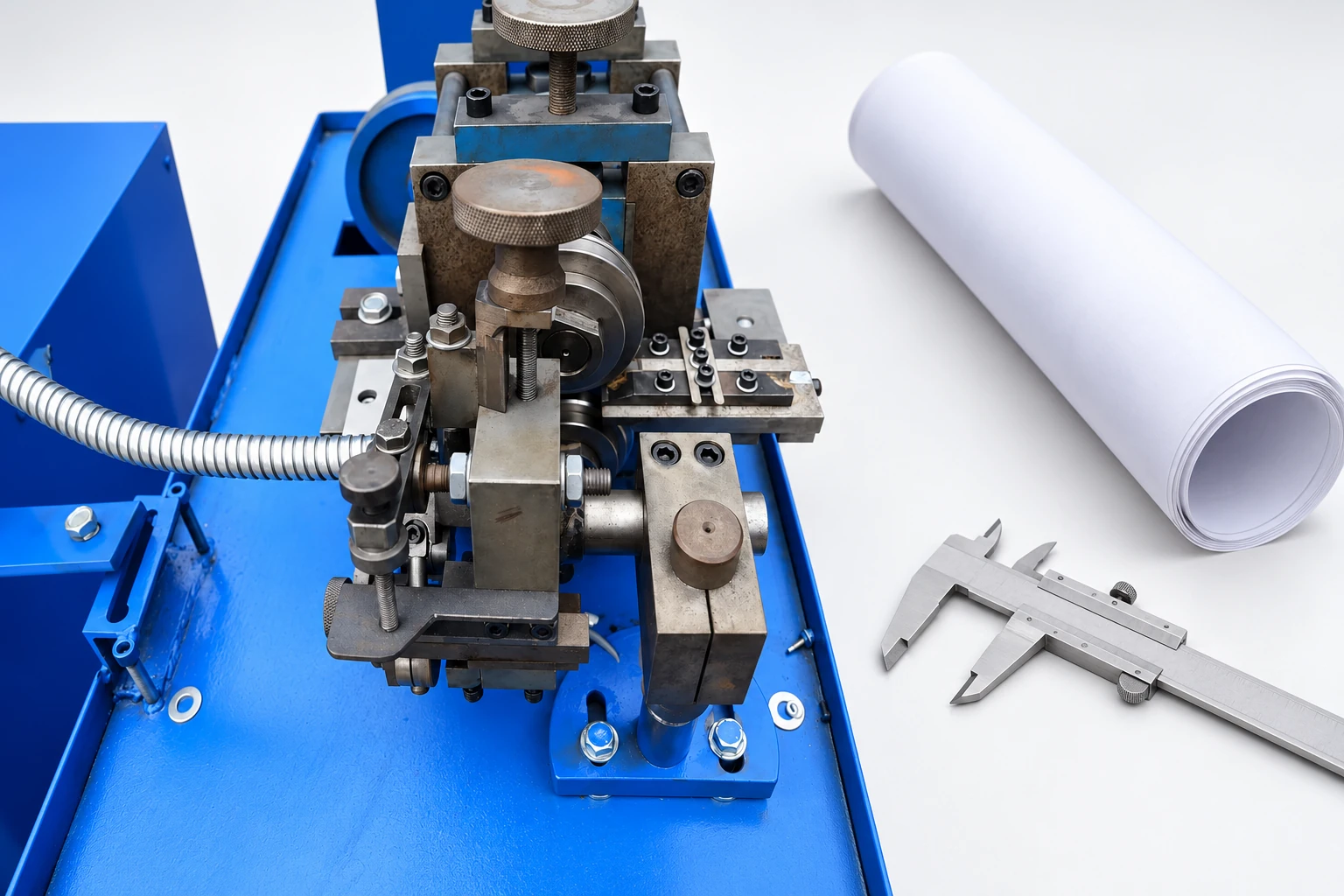
Define the finished conduit first
Provide a section drawing or an approved sample showing the intended lock profile, inside and outside diameters, pitch and any dimensional requirements. Square-lock and fully interlocked constructions require an appropriate forming arrangement. State that the intended product is cable-protection conduit and describe its end use. A photograph labelled flexible hose is insufficient to define the process, and it does not establish that the resulting product is suitable for carrying pressurized fluids.
Specify feed strip and size changes
Identify strip material, grade, width and thickness, plus the supply-coil format available at the factory. Ask the machine supplier to confirm the compatible input specification for each intended conduit size. Calmec distinguishes tooling profiles and strip configurations; BOBO also identifies strip width and thickness as machine inputs. Include the planned product mix and request a clear tooling schedule showing what is included, what changes between sizes and which additional parts are needed.
Compare production conditions consistently
State the required finished output and ask each supplier to identify the material, conduit size and operating conditions used for its estimate. Distinguish spindle speed from finished line speed; manufacturer specifications may list both. Describe coil lengths, collection or take-up requirements and whether cutting belongs in the proposed line. For a fair comparison, request a scope that also identifies the feeder, forming station, controls and downstream equipment included in the quoted configuration.
Agree installation and acceptance requirements
Send the available power supply, floor layout and access constraints, and request the supplier's utility and installation requirements. Before purchase, define the trial material, sample sizes, dimensional checks and documentation expected at acceptance. Include the training, operating instructions, maintenance information and spare parts needed by the factory. Agree how demonstrated output will be measured and recorded. A machine's ability to form conduit does not itself prove every certification or performance claim for the finished product.
Common questions
Can one machine produce every conduit size?
Only within its confirmed material, size and tooling capability. Request a product-by-product tooling schedule.
Is spindle RPM the finished production speed?
No. Ask for finished line speed or output under the agreed product and material conditions.
Does a conduit machine establish a pressure rating?
No. Cable-conduit forming capability does not establish fluid-pressure suitability for the resulting tube.
Explore related products
Browse dimensional referencesNeed a product recommendation?
Send the dimensions, material, operating conditions and quantity. Our team will review the requirement for your installation.
Discuss your specificationFurther reading
Technical background from manufacturer publications. Product-specific values and approvals apply to the referenced manufacturer and configuration.