
PRODUCT SELECTION
Adhesive-Lined vs Single-Wall Heat Shrink Tubing
Use single-wall heat shrink for insulation, identification, or mechanical covering when a bonded environmental seal is unnecessary. Consider adhesive-lined tubing when moisture exclusion matters, then verify adhesive compatibility, joint geometry, installation temperature, and the evidence required for the completed assembly.
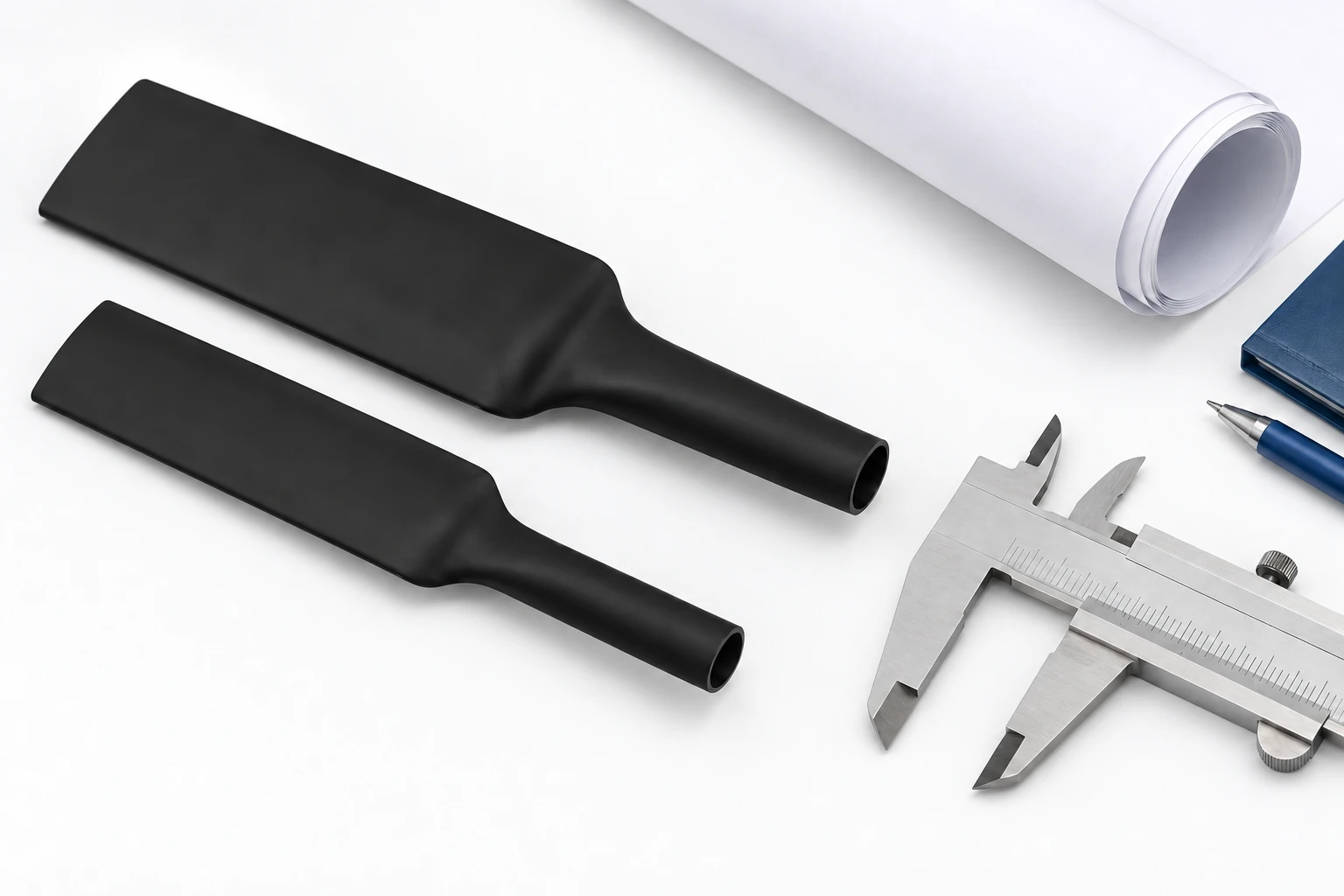
Define whether the sleeve must cover or seal
Start by identifying the failure you need to prevent. A terminal may require electrical insulation and abrasion protection; an exposed splice may also need a barrier against moisture reaching the conductors. TE describes single-wall tubing for insulation and mechanical protection, while its dual-wall designs add an adhesive or encapsulant layer. The practical purchasing question is whether the application needs a bonded interface. Document that requirement before comparing tubing prices, because similar-looking sleeves can serve different functions after they have been installed.
Check what the adhesive must bond to
Adhesive-lined tubing uses an inner material that softens during installation while the outer sleeve recovers. The lining must work with the actual cable jacket, metal surface, or other substrate. Tell the supplier the substrate materials, service temperature, expected fluids, and any surface treatments. Ask about preparation and installation requirements rather than assuming every adhesive bonds to every plastic. For a multiwire splice, show the wire arrangement: a sleeve that grips the outside still needs to address potential moisture paths between adjacent wires.
Select geometry and heat process as a pair
Check that the expanded tube passes over the connection and that recovery brings it into contact with every intended sealing region. Allow enough length to cover the joint and reach suitable substrate on both sides, following the selected product's instructions. The assembly also needs to tolerate the prescribed heating process. Validate the result on representative parts, especially when connectors, thick conductors, or uneven shapes heat differently. Appearance alone should not replace the specified acceptance checks for an assembly that depends on environmental sealing.
Keep performance claims tied to the finished assembly
Adhesive presence is not a universal waterproof, submersible, or chemical-resistance claim. Those conclusions require an appropriate product and a validated installation for the service conditions. State whether the requirement is splash exposure, condensation, immersion, or another defined condition, and request supporting documentation. For DUCHUANG inquiries, include joint dimensions, substrate materials, diameter steps, sleeve length, adhesive requirement, and relevant acceptance criteria. This lets technical discussion focus on a specific assembly rather than an undefined request for the strongest heat shrink tube.
Common questions
Does single-wall tubing always have a thin wall?
No. Wall construction and wall thickness are separate specifications. Check the product's recovered wall thickness and material.
Is adhesive-lined heat shrink automatically waterproof?
No. Sealing depends on the adhesive, substrate, geometry, installation, and verified exposure conditions of the completed assembly.
Can adhesive-lined tubing be chosen by shrink ratio alone?
No. Confirm expanded and recovered diameters, adhesive compatibility, required length, wall thickness, and installation conditions as well as the ratio.
Explore related products
Browse dimensional referencesNeed a product recommendation?
Send the dimensions, material, operating conditions and quantity. Our team will review the requirement for your installation.
Discuss your specificationFurther reading
Technical background from manufacturer publications. Product-specific values and approvals apply to the referenced manufacturer and configuration.
Continue reading
BUYER GUIDE
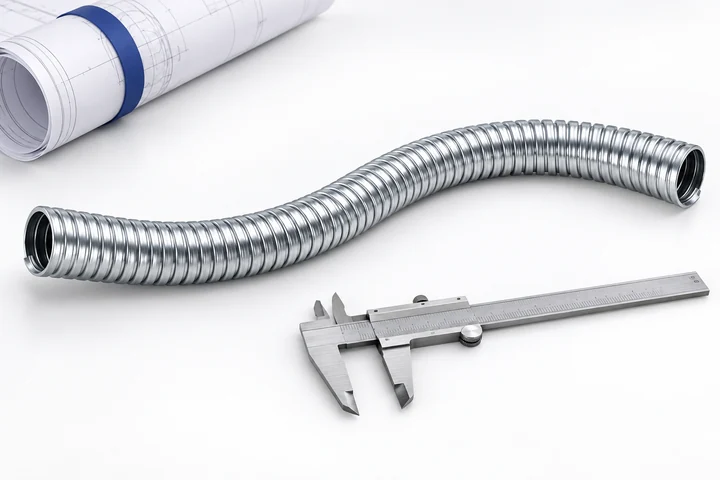
How to Select Flexible Metal Conduit for Industrial Cable Protection
Select flexible metal conduit by cable bundle size, movement, mechanical exposure, environment, and the required fitting system. Confirm actual internal diameter, bend radius, material, jacket, and connection details. Treat ingress protection and electrical continuity as properties requiring documented system verification.
Read the guide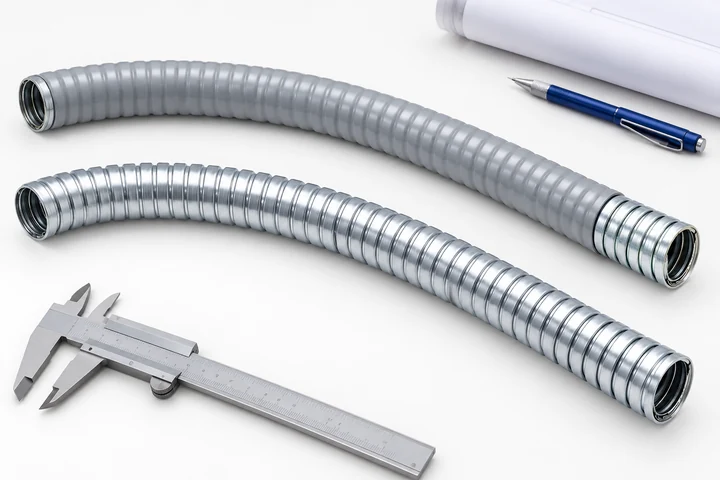
BUYER GUIDE
Coated vs Uncoated Flexible Metal Conduit: What Changes?
Choose coated metal conduit when the specified jacket and matching fittings address the installation's liquid or surface exposure. Consider uncoated conduit when its documented mechanical, temperature, and environmental properties fit the job. A coating alone does not establish liquidtight performance.
Read the guide