
PRODUCT SELECTION
Coated vs Uncoated Flexible Metal Conduit: What Changes?
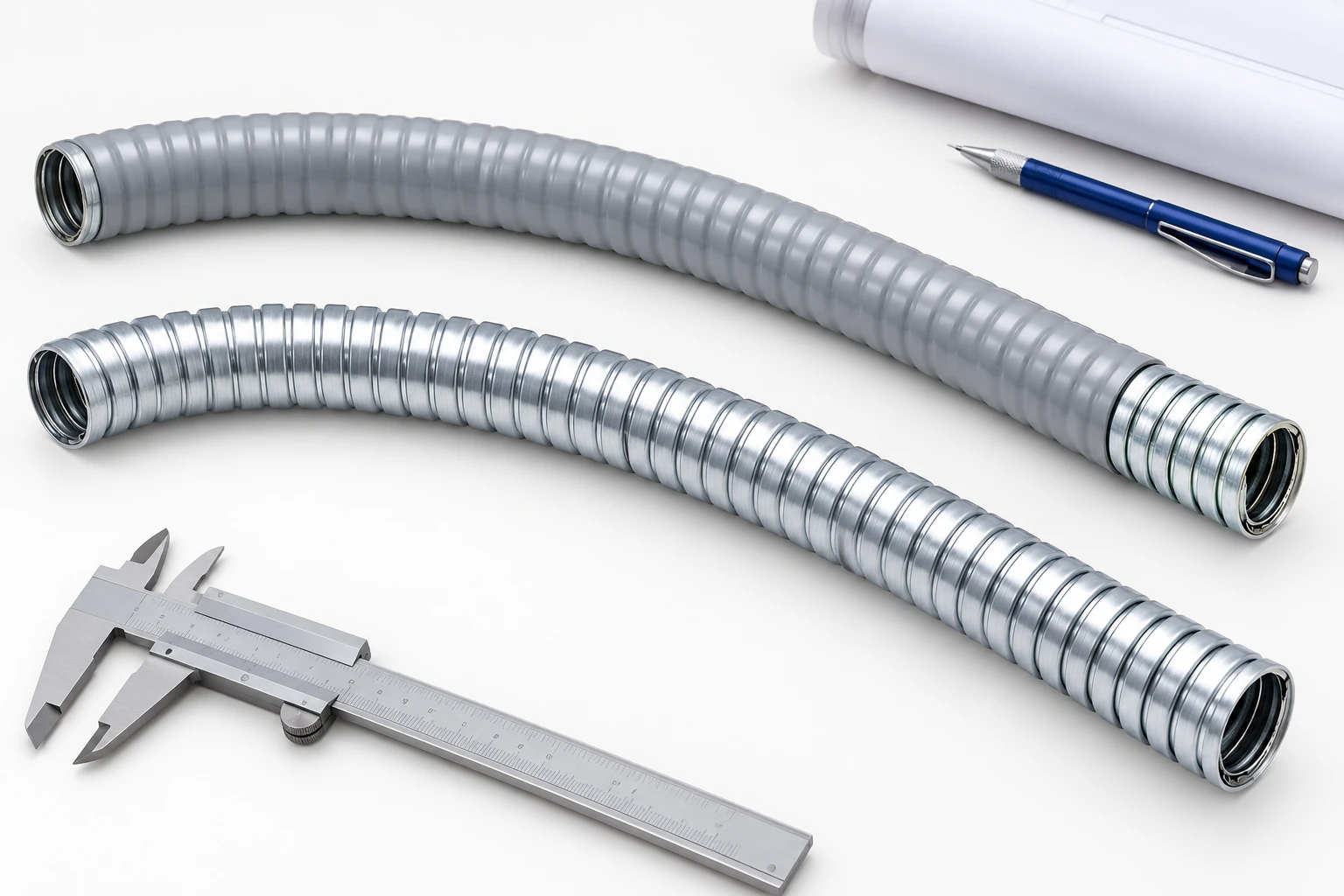
Choose coated metal conduit when the specified jacket and matching fittings address the installation's liquid or surface exposure. Consider uncoated conduit when its documented mechanical, temperature, and environmental properties fit the job. A coating alone does not establish liquidtight performance.
Identify what the outer layer needs to do
Begin with the exposure at the cable route: dry indoor air, occasional splashes, cutting fluid, cleaning agents, rubbing contact, or outdoor weather. An outer coating changes the surface facing that exposure, but its usefulness depends on the actual polymer and construction. Request the jacket material by name and ask about compatibility with the chemicals used on site. A purchasing description that says only coated flexible conduit leaves important differences unresolved, including jacket thickness, flexibility, and the intended termination method.
Distinguish covered, liquid-resistant, and liquidtight
These descriptions should not be treated as interchangeable. ABB lists covered liquid-resistant and covered liquidtight conduit families separately, with ingress performance tied to appropriate fittings. A continuous-looking jacket is therefore only one part of the selection. The connection must seal where the conduit meets the fitting and where the fitting enters the enclosure. Ask the supplier to name the tested assembly and installation conditions. Any requested protection rating should refer to that assembly rather than an isolated coil of conduit.
Review temperature, abrasion, and fire requirements separately
Do not assume that adding a jacket improves every performance characteristic. Check the selected conduit's static and moving temperature limits, jacket abrasion behavior, and any fire or smoke requirements independently. ABB's metallic catalogue separates these attributes by construction; its uncoated options and low-fire-hazard jacket options serve different needs. For a hot route beside machinery, describe both normal temperature and occasional exposure. For rubbing contact, show where contact occurs so supports, routing changes, or an appropriate protective construction can be considered.
Compare installed cost and inspection access
Compare the price of the conduit together with fittings, seals, installation time, and replacement access. A cheaper coil may require a different connector set or more space at the enclosure. Inspect sample terminations for fit and follow the supplier's cutting and assembly instructions, particularly where the jacket forms part of the sealing arrangement. For a quotation, specify the metal, preferred jacket, environment, conduit dimensions, entry thread, and required documentation. Ask the supplier to identify any assumptions before approving the final part description.
Common questions
Is PVC-coated conduit always liquidtight?
No. Confirm the particular conduit and fitting combination, its declared ingress protection, and installation conditions. The coating material alone does not prove the assembled seal.
Is uncoated stainless conduit suitable outdoors?
That depends on the stainless grade, local exposure, connections, and required ingress protection. State the environment and request product-specific confirmation.
Can I reuse fittings when changing to coated conduit?
Only if the supplier confirms compatibility with the new conduit construction and dimensions. Jacket presence and termination design can change how a fitting grips and seals.
Explore related products
Browse dimensional referencesNeed a product recommendation?
Send the dimensions, material, operating conditions and quantity. Our team will review the requirement for your installation.
Discuss your specificationFurther reading
Technical background from manufacturer publications. Product-specific values and approvals apply to the referenced manufacturer and configuration.
Continue reading
BUYER GUIDE
How to Select Flexible Metal Conduit for Industrial Cable Protection
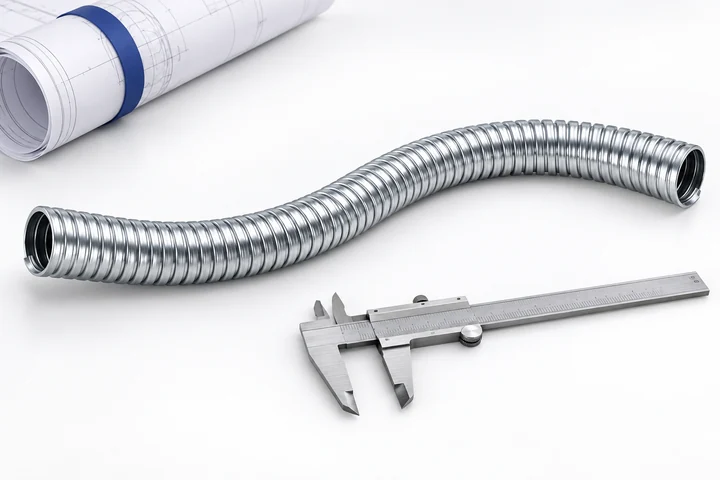
Select flexible metal conduit by cable bundle size, movement, mechanical exposure, environment, and the required fitting system. Confirm actual internal diameter, bend radius, material, jacket, and connection details. Treat ingress protection and electrical continuity as properties requiring documented system verification.
Read the guide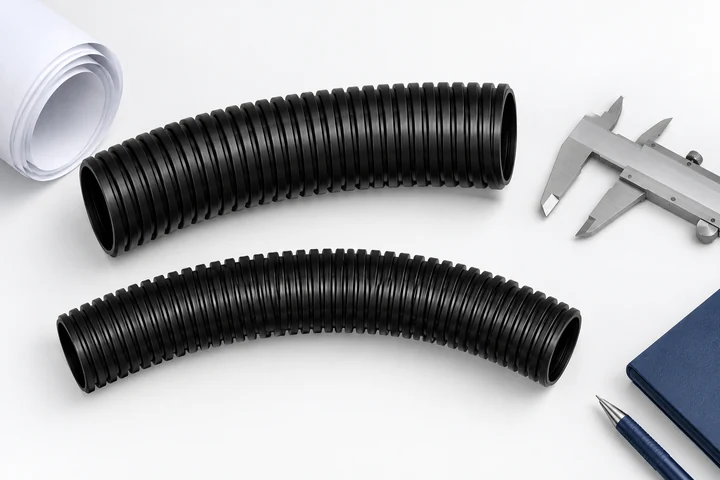
BUYER GUIDE
PA vs PP vs PE Corrugated Conduit: A Practical Selection Guide
Compare PA, PP, and PE corrugated conduit using the exact material grade, temperature, motion, chemical exposure, and required protection. Polymer initials narrow the search but cannot establish performance. Check wall construction, slit design, fittings, and documented properties before approving substitution.
Read the guide