
PRODUCT SELECTION
PA vs PP vs PE Corrugated Conduit: A Practical Selection Guide
Compare PA, PP, and PE corrugated conduit using the exact material grade, temperature, motion, chemical exposure, and required protection. Polymer initials narrow the search but cannot establish performance. Check wall construction, slit design, fittings, and documented properties before approving substitution.
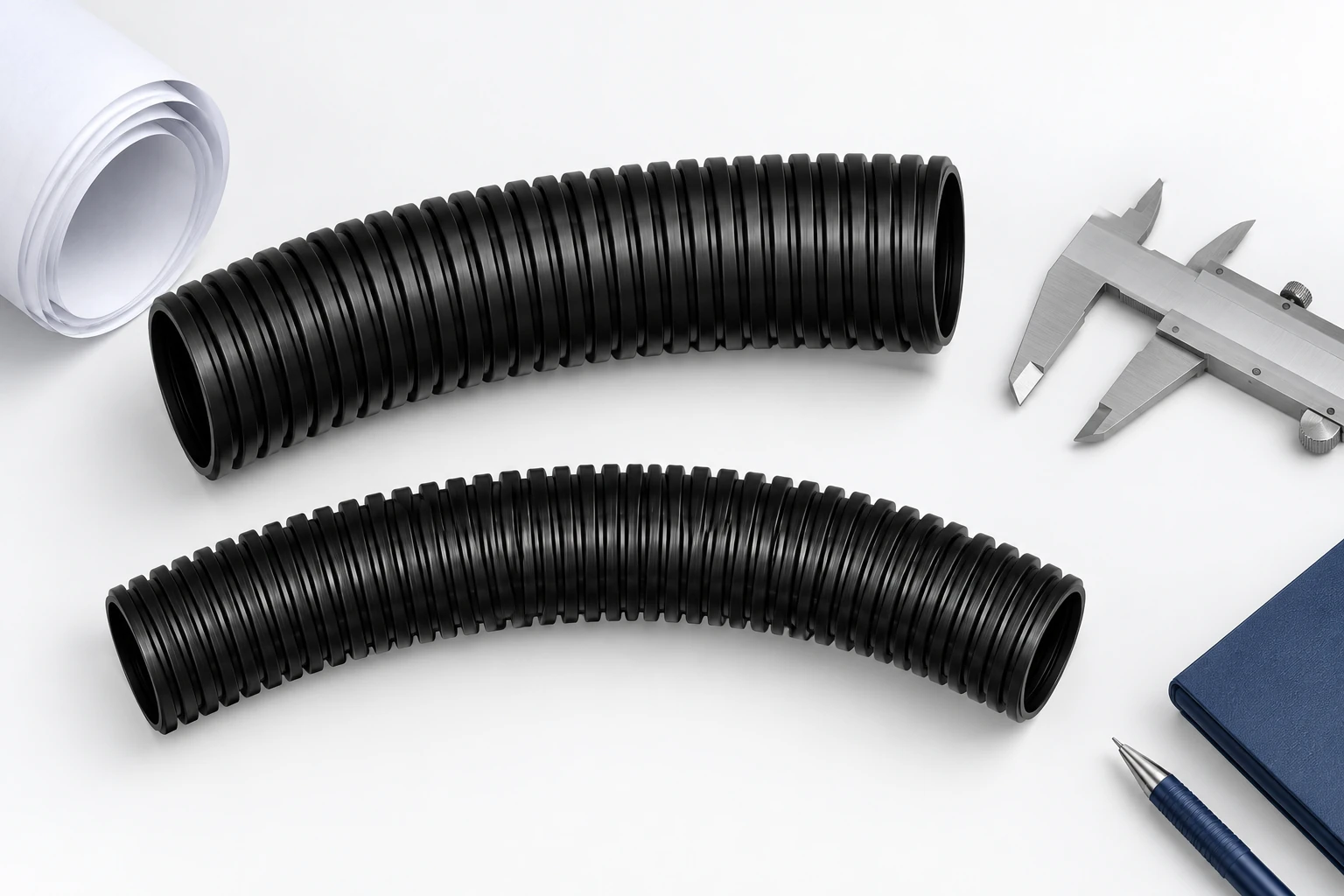
Use PA as a family name, then compare the grade
PA means polyamide, with grades such as PA6 and PA12 used in cable protection. For machinery, start by checking abrasion, impact, and movement requirements against the selected product's data. HellermannTyton's PA6 HG-SW range is an example of a conduit designed around mechanical protection and flexibility; those characteristics should not be generalized to every PA tube. Specify whether the route moves and request the relevant temperature and bending information. Flame-retardant or UV-stabilized versions should be identified explicitly in the part description.
Evaluate PP where the chemical exposure supports it
PP means polypropylene. Some PP conduit formulations are selected for chemical environments: ABB describes its modified PP Harnessflex conduit as acid resistant and intended for lighter applications. That is a useful screening clue, not a compatibility certificate for an unspecified acid or cleaning mixture. Identify the chemical, concentration, contact duration, and temperature when requesting a recommendation. Then compare mechanical protection and fire requirements independently. A material that suits one exposure may still be unsuitable for the route's crushing loads or repeated movement.
Check PE construction and service access
PE means polyethylene. HellermannTyton offers PE convoluted tubing in slit and unslit constructions, showing that material choice and access method are separate decisions. A slit can simplify fitting tubing around an existing harness or adding branches, but it creates a different enclosure arrangement from a closed tube. Describe whether connectors are already installed and whether future cable changes are expected. Request the exact temperature, UV, and flammability information for the proposed PE grade instead of importing figures from another manufacturer's range.
Compare complete samples under the same conditions
Send each supplier the same cable bundle, route drawing, temperature limits, exposure description, and movement requirement. Compare internal diameter, wall construction, bend radius, slit configuration, connector engagement, and support spacing before comparing price. Include any required fire or material documentation in the inquiry, with the relevant test method named. For a proposed PA-to-PP or PE-to-PA substitution, request an explicit response to every requirement. A change in polymer or wall design should trigger a fresh fit and application review rather than a name-only substitution.
Common questions
Which material is always best for industrial machines?
There is no universal winner. Compare a specified grade and conduit construction against the machine's mechanical, thermal, chemical, and movement requirements.
Does black corrugated conduit automatically resist UV?
No. Request a documented outdoor or UV-resistance specification for the exact product. Color alone is not sufficient evidence.
Can slit corrugated tubing be treated as a sealed conduit?
Do not assume sealing from the material or corrugated shape. Any ingress claim needs evidence for the complete slit or unslit conduit and fitting system.
Explore related products
Browse dimensional referencesNeed a product recommendation?
Send the dimensions, material, operating conditions and quantity. Our team will review the requirement for your installation.
Discuss your specificationFurther reading
Technical background from manufacturer publications. Product-specific values and approvals apply to the referenced manufacturer and configuration.
Continue reading
BUYER GUIDE
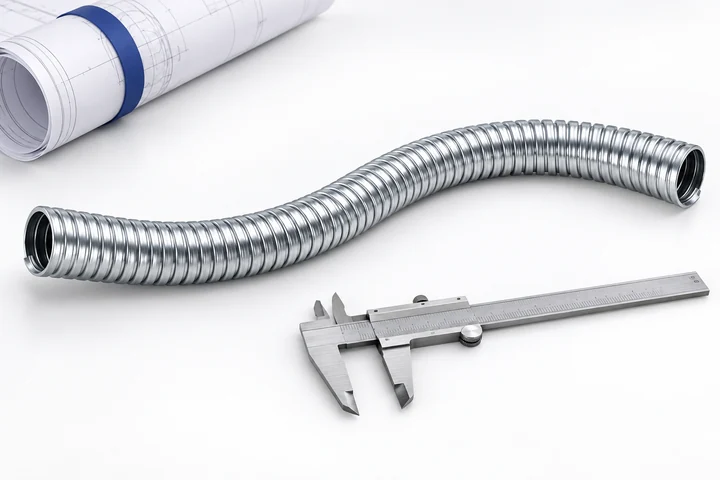
How to Select Flexible Metal Conduit for Industrial Cable Protection
Select flexible metal conduit by cable bundle size, movement, mechanical exposure, environment, and the required fitting system. Confirm actual internal diameter, bend radius, material, jacket, and connection details. Treat ingress protection and electrical continuity as properties requiring documented system verification.
Read the guide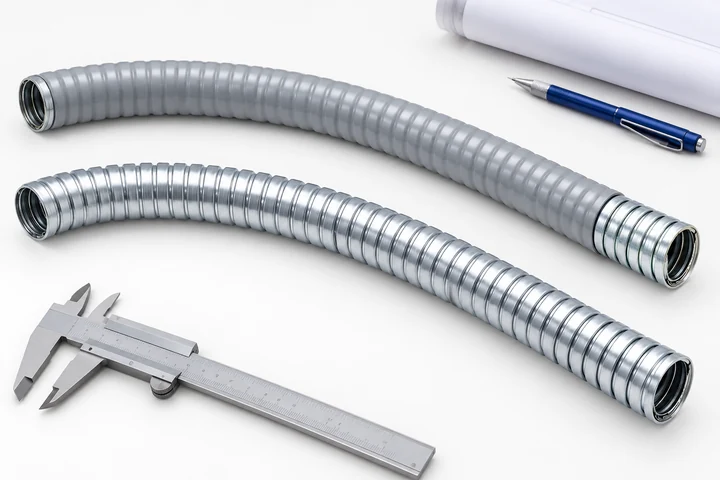
BUYER GUIDE
Coated vs Uncoated Flexible Metal Conduit: What Changes?
Choose coated metal conduit when the specified jacket and matching fittings address the installation's liquid or surface exposure. Consider uncoated conduit when its documented mechanical, temperature, and environmental properties fit the job. A coating alone does not establish liquidtight performance.
Read the guide