
PRODUCT SELECTION
How to Select Flexible Metal Conduit for Industrial Cable Protection
Select flexible metal conduit by cable bundle size, movement, mechanical exposure, environment, and the required fitting system. Confirm actual internal diameter, bend radius, material, jacket, and connection details. Treat ingress protection and electrical continuity as properties requiring documented system verification.
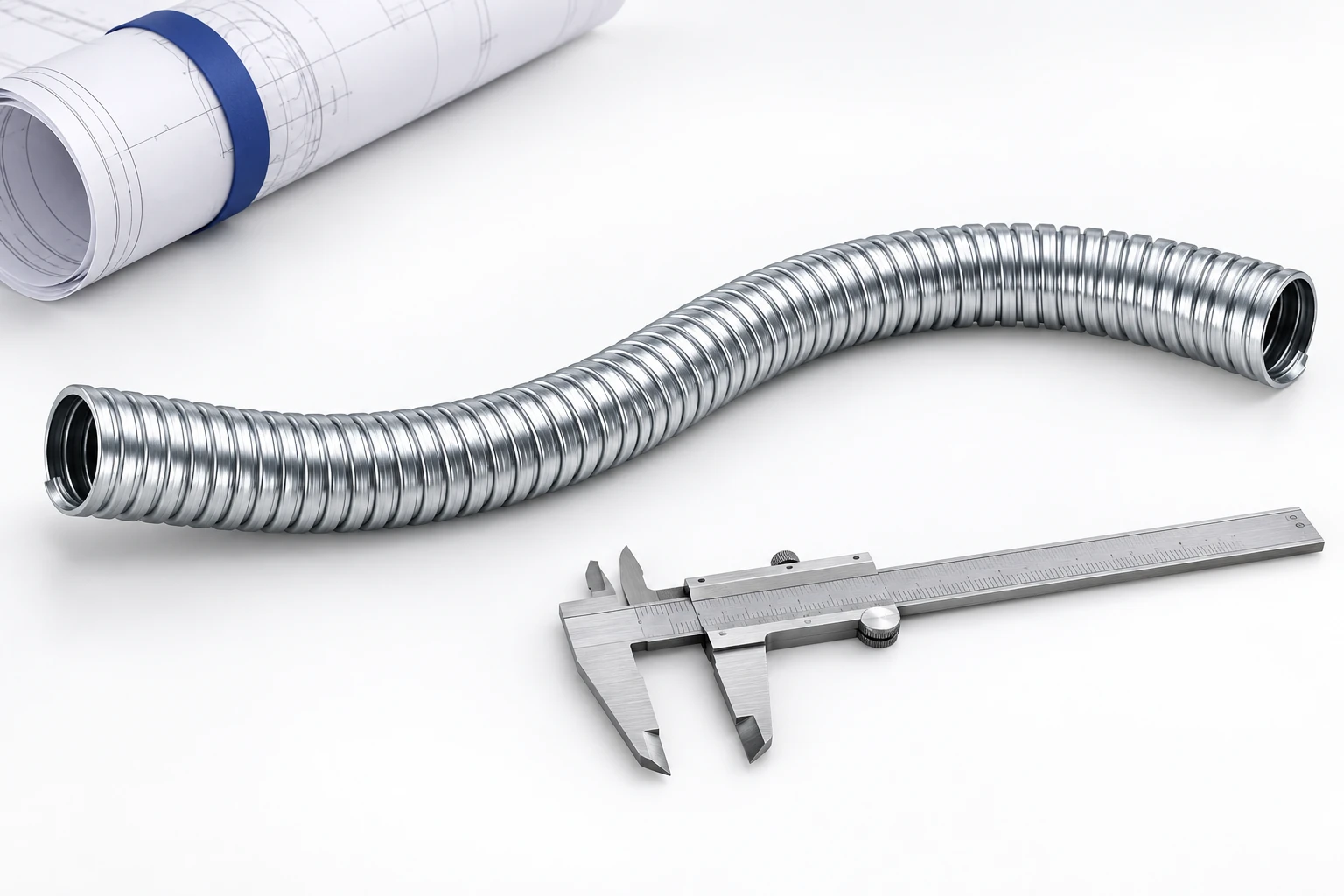
Start with the cable route and usable bore
Record the cable count, outside diameters, largest connector, route length, and available space before choosing a nominal conduit size. Check the actual internal diameter and the bore through each fitting: a spacious conduit can still lead into a restrictive connector. Allow for pulling, bends, and future maintenance using the applicable installation rules. Send a route sketch with the inquiry, especially where cables enter a cabinet at an angle or must pass through a tight machine opening.
Separate installation flexibility from repeated movement
A conduit that bends easily during assembly is not automatically suitable for continuous machine motion. Describe whether the route remains fixed, vibrates, flexes occasionally, or moves during every operating cycle. Include the smallest bend radius and whether the movement introduces twisting. Ask for the selected construction's movement and fatigue information rather than judging a short sample by hand. When comparing samples, assemble the complete route with its supports and fittings so that the actual bending points are visible.
Choose the metal and outer construction together
Galvanized steel, stainless steel, an external jacket, and an overbraid answer different selection questions. The metal contributes to mechanical protection; the outer construction changes what directly encounters abrasion, liquids, or cleaning chemicals. ABB distinguishes liquid-resistant, liquidtight, superflexible, and overbraided systems, illustrating why a single description such as metal hose is insufficient. Define the real exposure, then request compatible material and construction options. For outdoor or corrosive service, specify the environment instead of assuming every stainless grade or jacket behaves identically.
Specify a complete conduit and fitting assembly
A procurement specification should identify both conduit and termination parts, including entry threads, straight or angled orientation, seals, and mounting arrangement. Request the relevant system evidence when ingress protection, bonding continuity, or electromagnetic screening matters. Do not derive those properties from a photograph or the presence of metal alone. For a DUCHUANG inquiry, provide the cable dimensions, route drawing, operating environment, movement description, requested test documentation, and order length. This gives the supplier a concrete basis for confirming an appropriate assembly.
Common questions
Is nominal conduit size the same as internal diameter?
No. Nominal size identifies a product size designation. Use the selected product's actual internal and external dimensions, and confirm the fitting bore separately.
Does metal conduit automatically provide an earth path?
Do not assume it does. Confirm the applicable installation requirements and the documented continuity of the complete conduit, fittings, and enclosure connection.
What should I send when requesting a sample?
Send cable and connector dimensions, a route sketch, motion details, exposure conditions, entry thread, and required protection. Ask for the matching fittings with the conduit sample.
Explore related products
Browse dimensional referencesNeed a product recommendation?
Send the dimensions, material, operating conditions and quantity. Our team will review the requirement for your installation.
Discuss your specificationFurther reading
Technical background from manufacturer publications. Product-specific values and approvals apply to the referenced manufacturer and configuration.
Continue reading
BUYER GUIDE
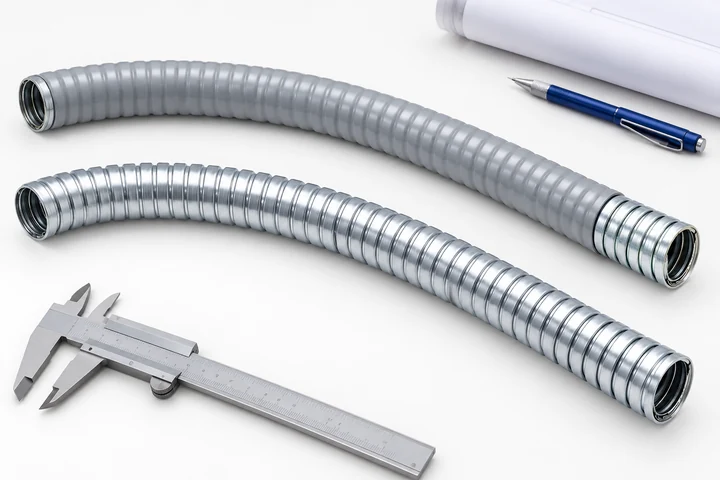
Coated vs Uncoated Flexible Metal Conduit: What Changes?
Choose coated metal conduit when the specified jacket and matching fittings address the installation's liquid or surface exposure. Consider uncoated conduit when its documented mechanical, temperature, and environmental properties fit the job. A coating alone does not establish liquidtight performance.
Read the guide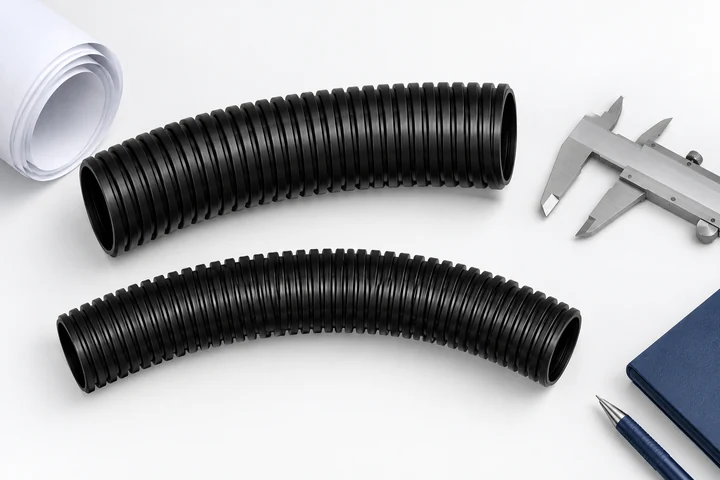
BUYER GUIDE
PA vs PP vs PE Corrugated Conduit: A Practical Selection Guide
Compare PA, PP, and PE corrugated conduit using the exact material grade, temperature, motion, chemical exposure, and required protection. Polymer initials narrow the search but cannot establish performance. Check wall construction, slit design, fittings, and documented properties before approving substitution.
Read the guide