ENGINEERING DETAILS
United-structure nylon cable gland
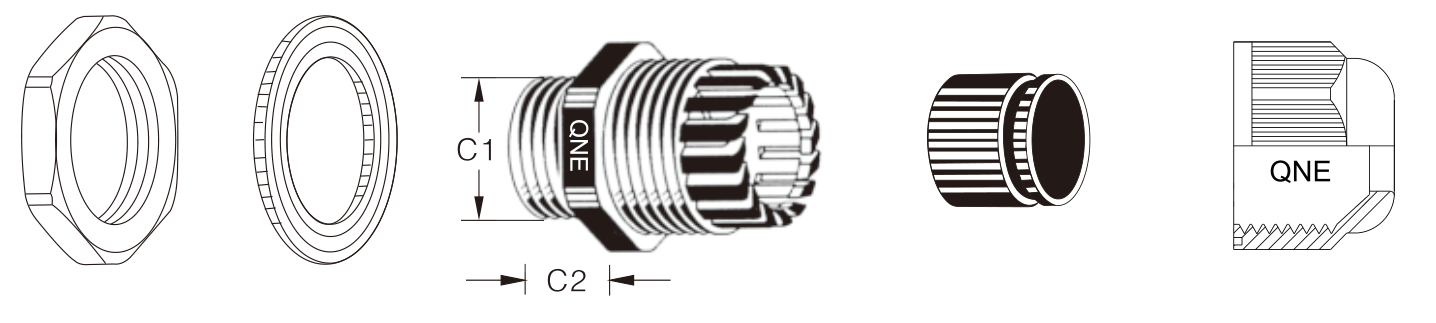
Left to right: lock nut, washer, body, seal and sealing nut. C1 identifies the mounting thread; C2 is its length.
 DUCHUANGCABLE SYSTEMS · SINCE 2013
DUCHUANG PRODUCT LINE
A cable gland locates and clamps a cable at an enclosure entry. Match the cable diameter, thread and sealing components to the complete installation.
All product lines10 selected product references
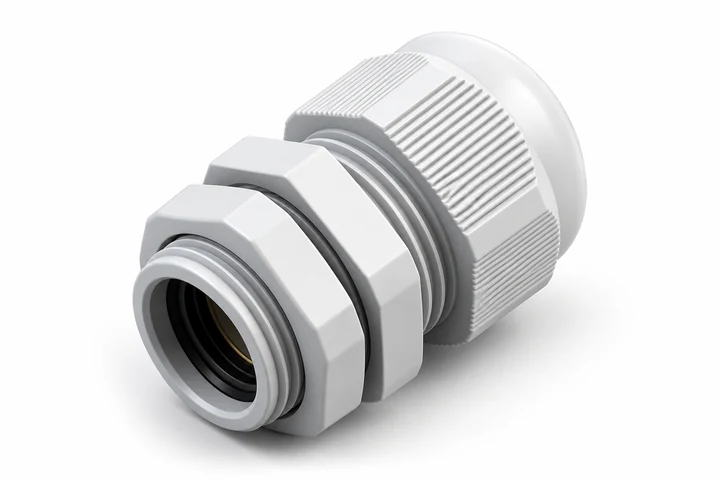
Introduction, dimensional enquiry and quotation details
View product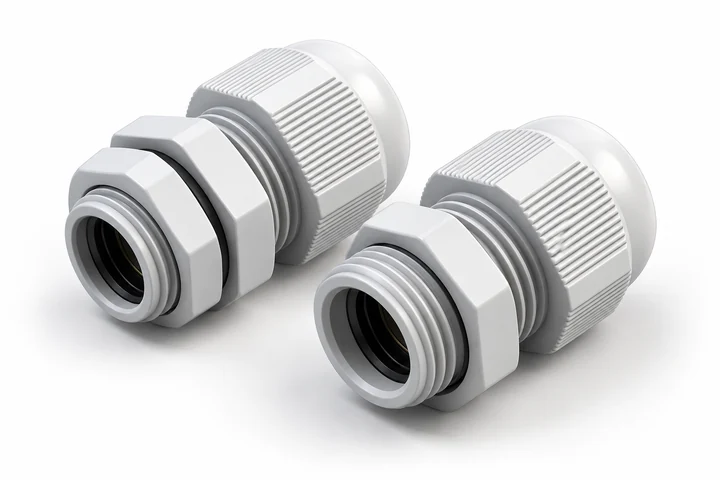
Introduction, dimensional enquiry and quotation details
View product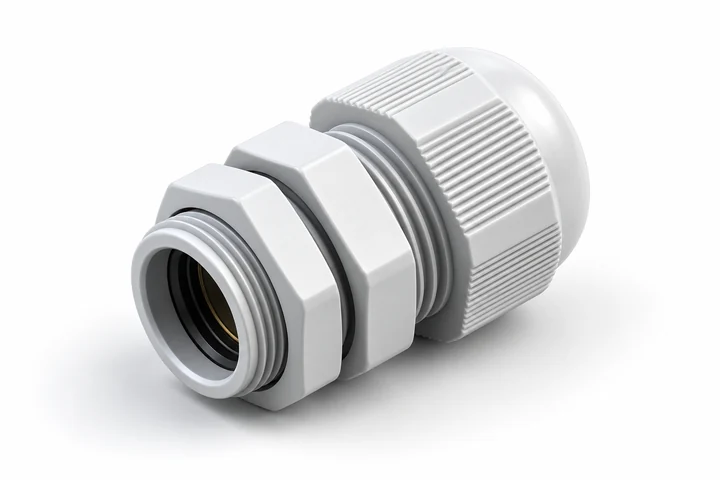
Introduction, dimensional enquiry and quotation details
View product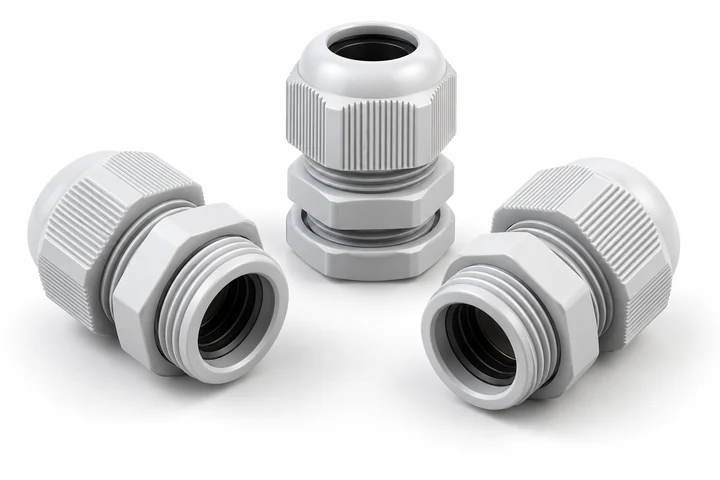
Introduction, dimensional enquiry and quotation details
View product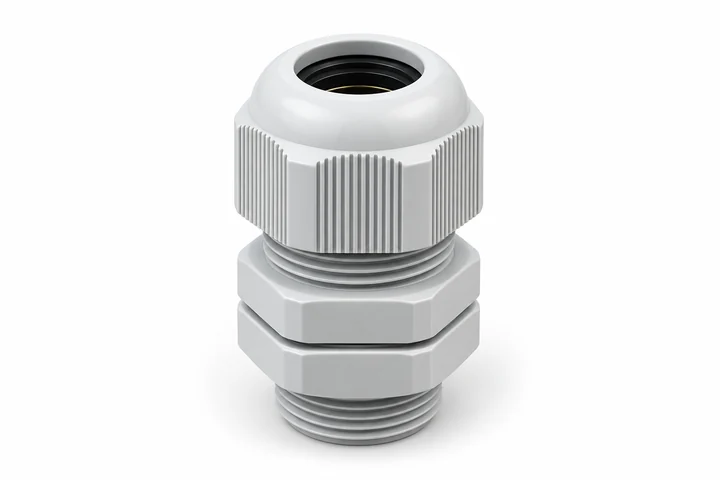
Introduction, dimensional enquiry and quotation details
View product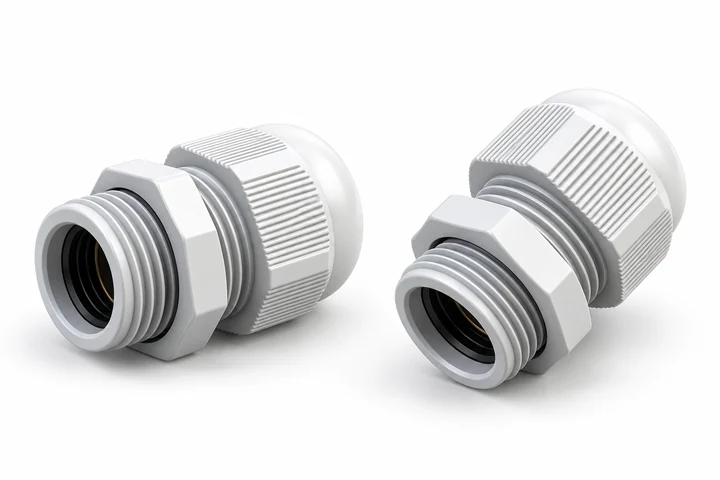
Introduction, dimensional enquiry and quotation details
View product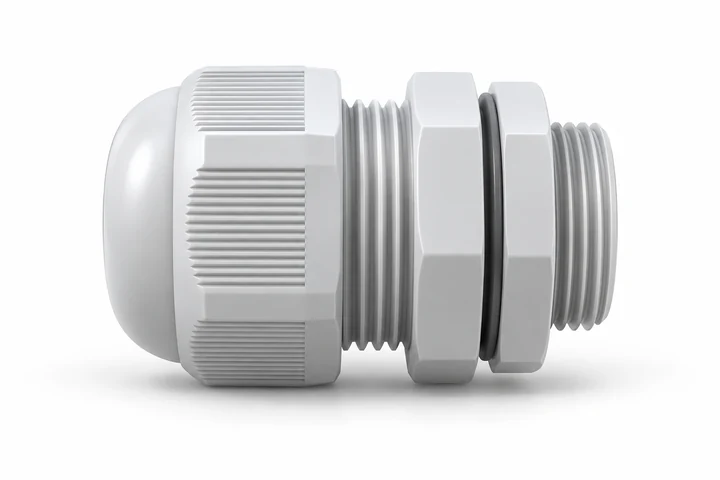
Introduction, dimensional enquiry and quotation details
View product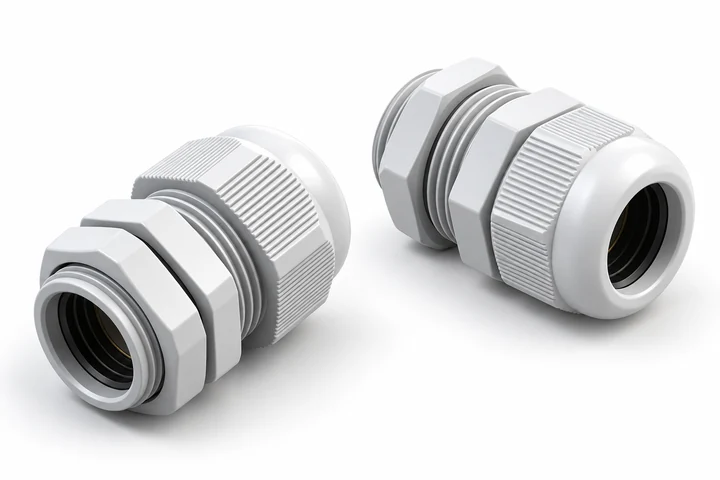
Introduction, dimensional enquiry and quotation details
View product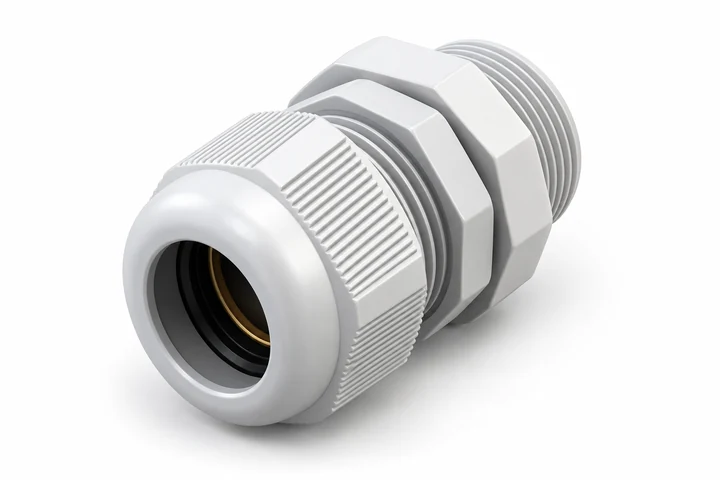
Introduction, dimensional enquiry and quotation details
View product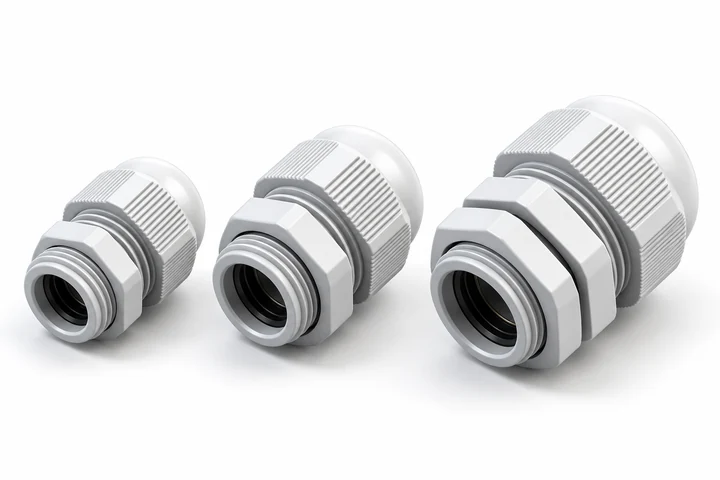
Introduction, dimensional enquiry and quotation details
View productCONSTRUCTION & DIMENSIONS
Choose the construction that matches your application. Final dimensions and tolerances are confirmed for the selected product.
ENGINEERING DETAILS
Left to right: lock nut, washer, body, seal and sealing nut. C1 identifies the mounting thread; C2 is its length.
UNDERSTAND THE RANGE
Cable glands secure and seal a cable at an enclosure entry. Conduit connectors terminate a protective conduit. Identify which interface is required before choosing thread, size and material.
A gland's cable clamping range and a connector's conduit size describe different interfaces.
Specify the exact metric, PG or NPT designation and any required engagement length.
Check the measured outside diameter against the selected seal's clamping range.
Confirm panel thickness, locknut access, seal materials and required ingress protection.
Electrical enclosures, junction boxes, control panels and machine cable entries.
No. M20 describes the mounting thread, not the cable range. Use the gland's separate cable clamping range.
They have different thread specifications. Confirm the actual entry thread and use an approved matching component or adapter.
BUYER GUIDE
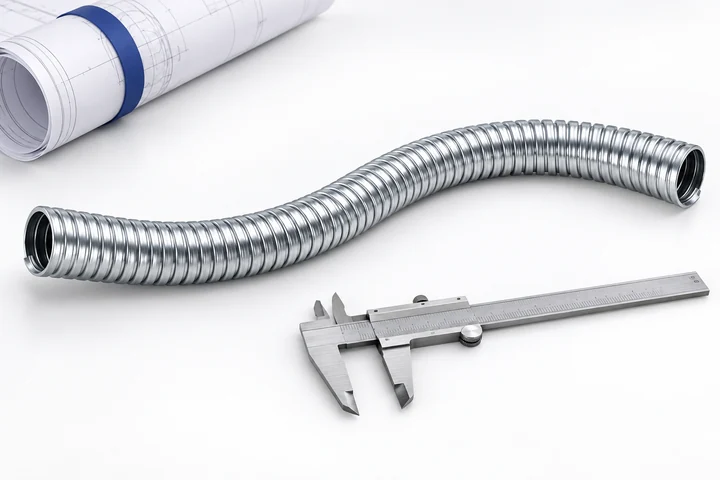
Select flexible metal conduit by cable bundle size, movement, mechanical exposure, environment, and the required fitting system. Confirm actual internal diameter, bend radius, material, jacket, and connection details. Treat ingress protection and electrical continuity as properties requiring documented system verification.
Read the guide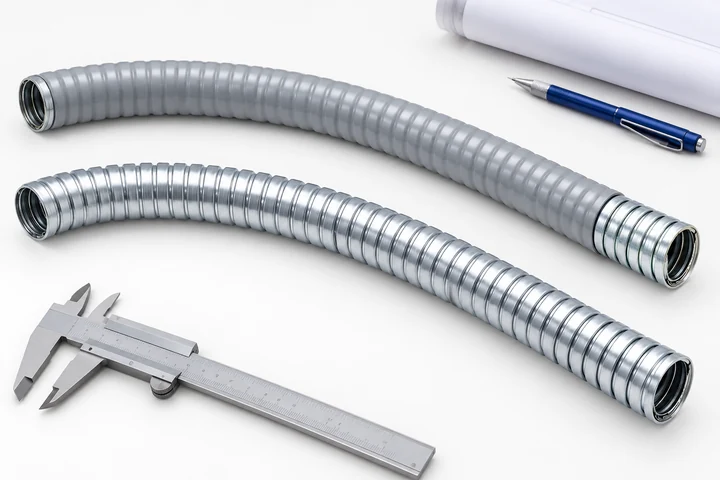
BUYER GUIDE
Choose coated metal conduit when the specified jacket and matching fittings address the installation's liquid or surface exposure. Consider uncoated conduit when its documented mechanical, temperature, and environmental properties fit the job. A coating alone does not establish liquidtight performance.
Read the guide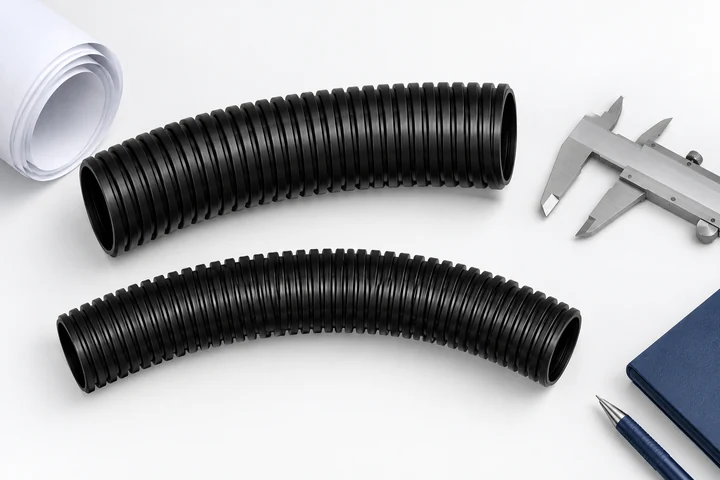
BUYER GUIDE
Compare PA, PP, and PE corrugated conduit using the exact material grade, temperature, motion, chemical exposure, and required protection. Polymer initials narrow the search but cannot establish performance. Check wall construction, slit design, fittings, and documented properties before approving substitution.
Read the guide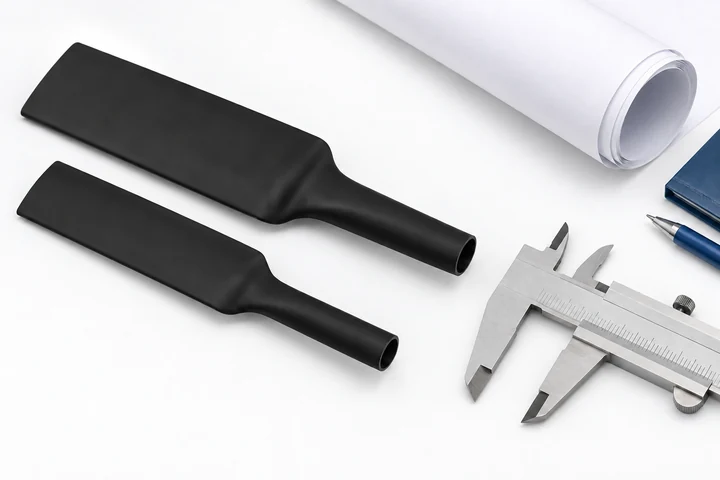
BUYER GUIDE
Use single-wall heat shrink for insulation, identification, or mechanical covering when a bonded environmental seal is unnecessary. Consider adhesive-lined tubing when moisture exclusion matters, then verify adhesive compatibility, joint geometry, installation temperature, and the evidence required for the completed assembly.
Read the guide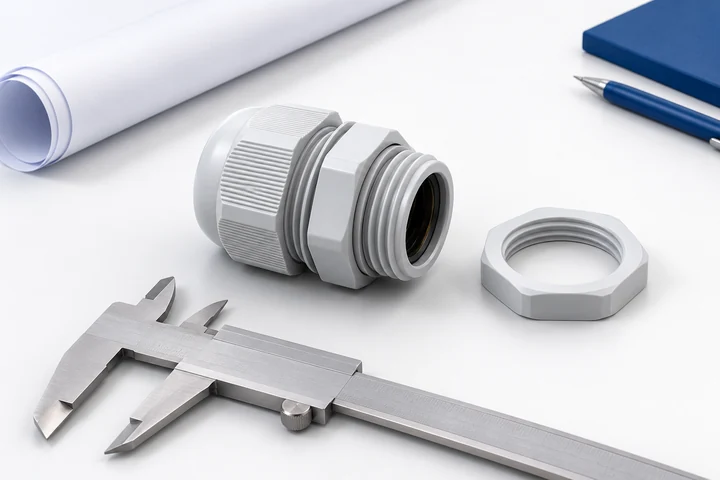
BUYER GUIDE
Match a cable gland's thread system, nominal size, pitch, and engagement to the enclosure entry. Metric, PG, and NPT designations are not interchangeable. Select cable clamping range separately, and confirm the sealing arrangement, mounting thickness, and installation instructions before ordering.
Read the guide
BUYER GUIDE
Choose a cable gland whose declared clamping range includes the cable's actual outside diameter, then verify enclosure mounting and installation conditions. An IP marking describes tested ingress protection; it does not compensate for an incorrect cable fit or incomplete assembly.
Read the guide