
PRODUCT SELECTION
Cable Gland Diameter and IP Ratings: Selecting the Complete Seal
Choose a cable gland whose declared clamping range includes the cable's actual outside diameter, then verify enclosure mounting and installation conditions. An IP marking describes tested ingress protection; it does not compensate for an incorrect cable fit or incomplete assembly.
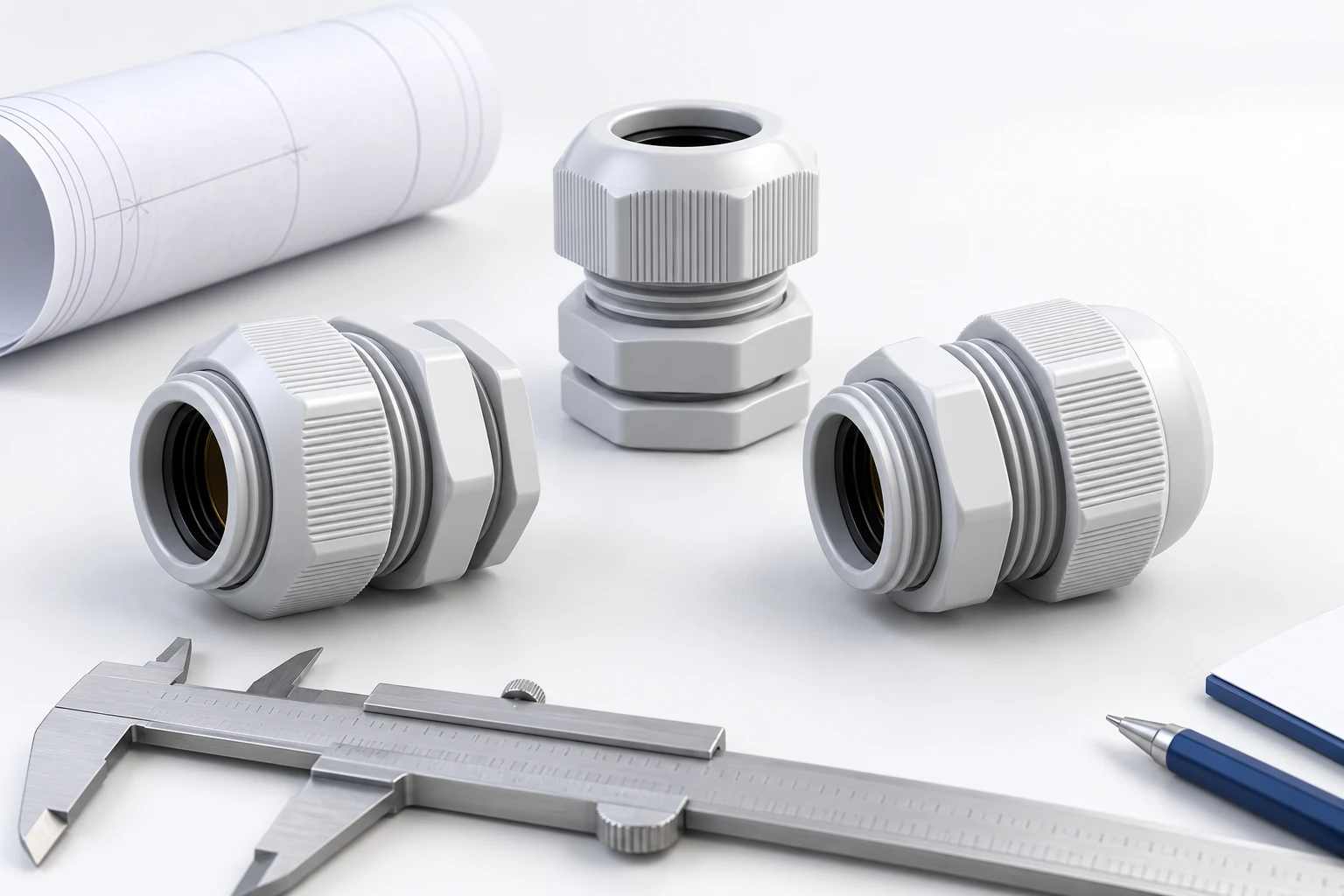
Measure the jacket where the gland will seal
Use the cable's outside jacket diameter, including its manufacturing tolerance, rather than conductor cross-section or a guessed size from the wire count. Measure the section that will sit inside the sealing insert and record whether it is round, oval, flat, or otherwise irregular. Check the entire expected diameter range against the selected gland's declared clamping range. If the jacket changes between approved cable suppliers, review gland compatibility again. A shared conductor specification does not guarantee identical external cable geometry.
Treat the cable and panel interfaces as separate checks
The cable seal and the enclosure entry both affect the installed result. Confirm the gland's thread, mounting method, panel thickness, and any specified washer or other sealing component. Request installation instructions for the exact part, including the relevant tightening requirements. Do not solve an undersized cable by simply applying more force or introducing an improvised filler. If several cables must share an entry, request a purpose-designed arrangement that specifies the individual cable sizes and the treatment of unused openings.
Specify the exposure behind the requested IP code
IEC 60529 is the standard for degrees of protection provided by electrical enclosures. For purchasing, an IP code should be accompanied by the exposure that matters to the application and the supplier's stated test conditions. Describe dust, splash, immersion, or cleaning conditions concretely instead of asking for the highest number available. Confirm the scope of any report and which components were assembled for testing. A component's declared performance is useful evidence, but the complete enclosure installation still needs an appropriate verification basis.
Make acceptance criteria part of the inquiry
Include the cable datasheet, measured jacket diameter, enclosure drawing, service environment, mounting accessories, and requested protection in the quotation package. Ask the supplier to identify the proposed gland, its sealing range, and the documentation available for that configuration. For a sample trial, assemble the actual cable and enclosure materials using the specified instructions. Record the chosen part code and installation parameters with the accepted assembly. This helps prevent later substitutions in cable, insert, washer, or mounting method from silently changing the validated arrangement.
Common questions
Can a large gland seal any smaller cable?
Only within its declared sealing range, or with a specifically approved insert arrangement. An oversized opening is not corrected merely by tightening harder.
Does an IP-rated gland make the whole enclosure equally rated?
No. The complete enclosure includes other joints, openings, and installation interfaces. Its protection must be supported for the actual assembled configuration.
Can several wires pass through a standard single-cable insert?
Do not assume the spaces between wires will seal. Request an insert or entry system specifically designed and documented for the number and sizes of cables involved.
Explore related products
Browse dimensional referencesNeed a product recommendation?
Send the dimensions, material, operating conditions and quantity. Our team will review the requirement for your installation.
Discuss your specificationFurther reading
Technical background from manufacturer publications. Product-specific values and approvals apply to the referenced manufacturer and configuration.
Continue reading
BUYER GUIDE
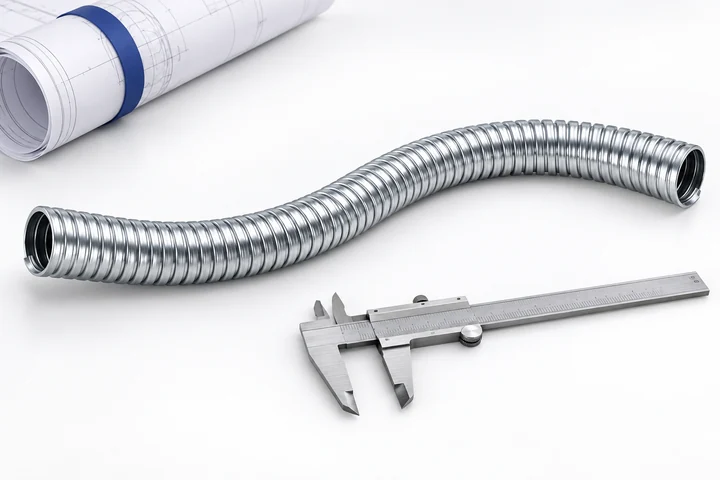
How to Select Flexible Metal Conduit for Industrial Cable Protection
Select flexible metal conduit by cable bundle size, movement, mechanical exposure, environment, and the required fitting system. Confirm actual internal diameter, bend radius, material, jacket, and connection details. Treat ingress protection and electrical continuity as properties requiring documented system verification.
Read the guide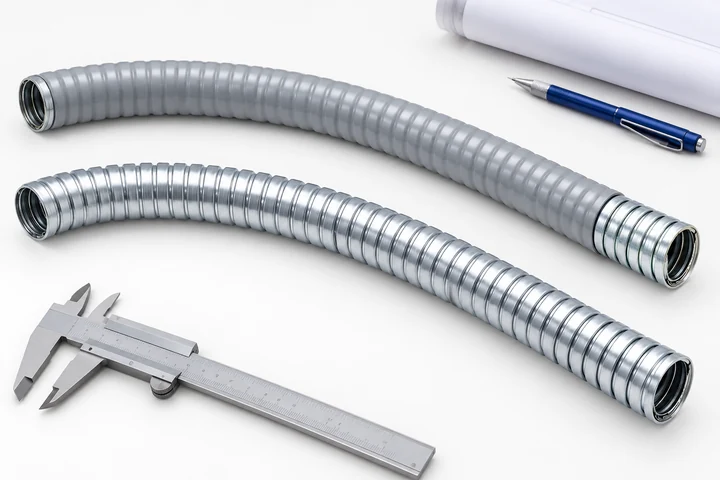
BUYER GUIDE
Coated vs Uncoated Flexible Metal Conduit: What Changes?
Choose coated metal conduit when the specified jacket and matching fittings address the installation's liquid or surface exposure. Consider uncoated conduit when its documented mechanical, temperature, and environmental properties fit the job. A coating alone does not establish liquidtight performance.
Read the guide